March 17, 2014


March 10, 2014
Matt Sowell - The Deadman's Rag
Matt Sowell starts The Deadman's Rag with patience and space. The sparse and wide open piece, "Dusty Road" puts this listener out in the middle of nowhere, the sky dominating the landscape. Eventually the agoraphobia fades, the road feels right and the traveler gets on down that Dusty Road.
Sowell's effort features 13 solo pieces, all penned by Sowell himself. Dusty Road is performed on a Weissenborn in open G tuning. The album is also peppered with 6 string and 12 string pieces.
As you would expect, there's lots of open tunings to be found, what you might not expect is Sowell plays a lot of them on Gibson guitars. "Walking the Tracks" is a contemplative and yet somehow playful piece in open D, played on a Gibson J-180.
Recorded with a variety of mikes, these tracks are nonetheless cut as a single track, no overdubs. "Wild horses on the Hills of the dead" is played in EAC#EAC# and it isn't as dark and ominous as the title might imply. For me, just the right amount of dissonance.
The 2nd half of the album is full of songs titled as rags, the kind you might expect, short and crisp and some you might not. "Dead Man's Rag" clocks in at 8:35 minutes and is full of variation as Sowell works his way through the iterations (nicely separated by space) of his work. It's played on a Takamine 12 string with just the right amount of slide work.
Click HERE to get on over to Sowell's Bandcamp
March 7, 2014
Trace Bundy - ESPN Theme Fan Jam Winner
Trace Bundy is one of our own here in Colorado. If you get a chance to see him, go. He's a great live show and tours all the time!! Bundy plays the slapping and tapping style of solo guitar. He plays some of his own stuff and covers from all over the musical spectrum from Guns N' Roses to a disco medley.
ESPN had a contest where musicians play the show's theme and fans voted for their favorite. The fact that a solo guitarist won is great!
March 4, 2014
Somewhere Society by John Harrison
I really like this effort. Six strings, 12 strings, all good. Free download. Check it!!
March 2, 2014
Paco de Lucia (21 December 1947 – 25 February 2014)

At the risk of sounding like ‘one of those people,’ flamenco music is the purest most authentic music for the guitar. I usually chuckle when it comes to discussions, debates and assertions about authenticity. It’s such an academic exercise with so much subjective bias that I’m quickly bored with it.
There are arguments made all the time about the purity and authenticity of flamenco. The irony is that you will find arguments in the community that it has morphed and changed and is no longer pure and just as many saying change is inevitable, without it flamenco dies, therefore the new stuff is still pure and authentic because it’s simply evolution. But that isn’t really what I’m talking about.
I’m talking about the perfect genre for the guitar.
String buzz is used purposefully by flamenco guitarists. I don’t hear it as a detriment to the music as so many do, it’s a part of it, it’s a sound that the guitar is capable of making, so don’t shun it, don’t over-do it, embrace it. Other techniques the flamencos use: sliding, hammer-ons, pull-offs. And then there is the rasgueado, a technique still confined primarily to flamenco and yet seemingly so right for the guitar. And dissonance, for those of you that like that in your American Primitive playing, try listening to Callejón De Las Canteras by Tomatito. The Taranta form of flamenco is amazing and beautiful.
Flamenco not prissy, board-up-the-ass classical, though it can display all the touch and tone of classical if it wants too. Andrés Segovia tried to remove the use of rasgueado from the classical school, considering it to have been developed "in the noisy hands of the gypsies." Flamenco may be the most challenging style of guitar music to learn.
Flamenco uses the guitar’s natural percussive qualities with some tapping, thumping and string buzz. But at the same time it isn’t centered on that style. Michael Hedges and Don Ross, sure that’s great stuff.
The flamencos knew the value of percussion 100 years ago.
And, it’s natural, no thumbpick, no flatpick. Fingers and nails. Strings and wood and glue. And soul.
All of this of course has its roots in necessity. The gypsies were resourceful if not resource laden. That shaped the way the guitar was played and it’s still there today. Ah! So the purity is retained!?
And as South American and Cuban influences crept into the music they were again resourceful in saving what might have been a fading folk music by injecting subtle influences. Paco de Lucia turned it upside down, adding new harmonies and even new instruments. The cajon was adopted by Paco and is now considered very flamenco and nearly every flamenco performance will have one. Pure and authentic, or not?
For me that is not the question, because it is still about how the guitar is played. That hasn’t changed.
Ever since I discovered flamenco music I've been drawn to it. Primarily the solo stuff, but with a band as well. It seems to be the music that was meant for the guitar. It has the power of rock and roll, the pain and sadness of the blues, it has it all. The guitar in its natural state. The guitar is incredibly adaptable but for me, flamenco is where all of its natural and best qualities are in perfect balance.
Paco de Lucia has passed out of this world. If you've never listened to flamenco, give it a try. Download a Paco concert HERE.
Paco de Lucia & Ensemble
Stadthalle Braunschweig, March 3rd 1988
DISC ONE
01 Callejon del Muro (Minera)
02 Gloria al Niño Ricardo (Soleá)
03 El Pañuelo (Bulerías)
04 La Barrosa (Alegrías)
05 improvisación sobre el intro de 'Callejon del Muro' y Rumba
06 Gitanos Andaluces (Bulerías)
07 Casilda (Tanguillos)
08 La Cañada (Tangos)
DISC TWO
01 band introduction
02 Rondeña
03 solo de flauta>Alegrías de baile (letras y subida)
04 Alegrías de baile (escobilla y coletilla)
05 Alta Mar
06 encore: Buana Buana King Kong
February 28, 2014
Dance of Death: The Life of John Fahey- American Guitarist

For today's post I'm pleased to present a piece by Steve Lowenthal who has written John Fahey's biography. Steve is currently running the VDSQ record label with new LPs coming soon from Anthony Pasquarosa, Sir Richard Bishop and Aaron Sheppard.
I have never been in the same room as John Fahey. That idea was central in my decision to write a biography on him. His allure as a subject was equal parts his entrancing music and his baffling mystique. I became attached to the idea that Fahey couldn't wield any hold over me, that I could be critical and biased in my assessment of his life and work. But he did anyway. Coming from a journalism background there seemed to be plenty of entry points into his illusionary world. Fahey came to me in the suburbs. As a teenager in the early 1990s I eagerly explored the musical fringes dictated by people like Thurston Moore. And all of the sudden, I bought CDs by Sun Ra, Minor Threat, Can, Autechre, and many more, all sort of thrust together, trying to figure out my tastes. During this time I discovered a CD reissue of John Fahey’s The Legend of Blind Joe Death on the display racks at Kim’s Underground on St Mark’s Place. By this time I had a drivers license and would make trips into the New York City to see weird bands at venues like The Cooler and the Knitting Factory. I remember thinking that Fahey sounded like country music, something I had no knowledge of at all.
The music was strange and hypnotic, its forms unpredictable. Its refrains in tracks like “Sligo River Blues” were sweet and nostalgic somehow, as if I’d heard them before, but knowing at the same time certainly that I’d never heard anything else like it.
I’d listen to him in my car while driving around, the pensive melodies soundtracked the suburban landscape. Fahey’s heavy thumb kept the rhythm as the miles on my mom’s ‘89 Mercury Sable ticked onward. At its core, I found his music to be soothing, but not relaxing. I could identify with something, but with no words or images to attach to. Only my intuition guided me. Once I had entered college and slowly became involved in contemporary underground music, everyone knew about Fahey. He was just one of those guys that if you were into experimental music, you’d know about, and he was in the scene at that time, playing gigs and putting out records. He was around.
I remember reading Fahey’s “Bukka White” fishing story when it was first published in the experimental music zine Halana. I recall being fascinated by the raw openness of his writing. A brutal story of abuse, framed in the context of his friendship with this man from another place. The juxtaposition of the imagery struck me as vivid and unique. No one in the experimental music community was speaking from a place of direct personal reflection. But Fahey was not one of these artists. He stood apart. When he died in 2001, I had no discernable reaction. My parents are older than Fahey was when he died at 66, yet he seemed much older than them. He also seemed troubled. I had read the stories he wrote in magazines and his books. He came off like a lonely guy. But that’s not the whole story.
When I started asking people why there hadn't been a biography on Fahey, no one could give me an answer.
Collections of writings had been published, but by no means did that constitute a biography. No one seemed to know the whole story; just pieces, fascinating pieces. I saw the need.
I spent the last five years researching the life of John Fahey. I spoke to his friends from throughout his life, the people who he worked with, his wives, and his colleagues and discovered a man as complex and rich as his music. Dance of Death- The Life of John Fahey- American Guitarist is his story and the heretofore-untold anecdotes about him by the people closest to him. Delta-Slider asked me to prepare some thoughts on my journey toward writing this book for John’s 75th birthday. I’m reminded of a question many people ask me: Why is John Fahey still relevant today? My answer usually involves talking about genre and how today listeners are used to hybridity of different forms of music and how the purist mentality is an antiquated ideology of authenticity, which meant more to previous generations.
But really it’s because his presence still looms large. His innovations are still fascinating, his personalities still bold, and his life more engaging than those who have come since.
His records have a place in any serious collection of 20th Century American music.But his life story hasn’t been fully revealed. It’s my hope with Dance of Death that the other non-musical side of his tremendous life can be told, through the voices of those who knew him best.
I wanted a subject that couldn’t interfere in my process. Everyday since 2008, when I started this project, I felt him there over my shoulder, as if he’s directing the narrative through the information that came my way. Fahey wanted his story to be told. He asked Stephen Calt in the ‘70s and Charlie Schmidt in the ‘90s to write his biography. Neither could, as they were too close to him. He wanted to be the subject of the kind of intense study that he devoted to Patton. I have never met John Fahey. He asked me to help tell his story. Why me? Maybe it’s because I’m not a guitarist. Maybe it’s that I hate hippies and New Age and love Merzbow. Maybe it’s because I’m a Jew and he felt we were emotionally open people. It’s hard to say really. I’m hoping that on some other plane, he will be sated by my work and that those who shared their experiences with me will be too. Happy 75th Birthday, John. See you on the sunny side of the ocean.
Steve Lowenthal NYC FEB 2014.
February 27, 2014
The Fahey Legacy
The numbers of people out in the world keeping the Fahey legacy alive is amazing to me. It comes from the picker on youtube.
Bill Brown may have the record on youtube for the most Fahey covers. Take a listen to this excellent version of "Days Have Gone By"
Life is like a mountain railroad. Actually, this guy might have more than Bill, wow. The TAB of this was posted this week!
And this TAB was posted this week too!

Well, only one more day of Fahey Week. And tomorrow's post is more of today, the Fahey legacy. But it deserves a post all it's own. Steve Lowenthal has written the first bio of Fahey and it finally has a publish date. Steve has been kind enough to write a short piece for Delta-Slider about the book. That will be up tomorrow, see you then Friends of Fahey.
Bill Brown may have the record on youtube for the most Fahey covers. Take a listen to this excellent version of "Days Have Gone By"
Life is like a mountain railroad. Actually, this guy might have more than Bill, wow. The TAB of this was posted this week!
And this TAB was posted this week too!
And then we have Benjamin Ferguson. This guy had a book sitting in his brain that had to come out. The title is a tip of the hat to two great artistic heroes of his: John Fahey and Cormac McCarthy. It's called "Stomping Tonight on an Appalachian Meridian."
Instead of chapters the book is divided into tracks, like a record. And I don't want to give too much away but the main character in named Kensington...as in the song by Jack Rose. Cool, eh?
He has written this novel to honor American Primitive Guitar and some of its masters. He's offering it for free, one track a week for 9 weeks.
Check it at Benjamin K Ferguson
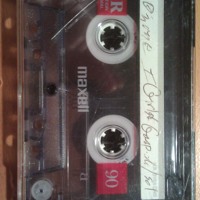
And then there's this... "In the 1990's my future wife was a record store clerk in Portland, Oregon. American guitar legend John Fahey was living in a nearby town and would visit the shop. Here are two mix cassettes that he made for her during that time."
Man, if some of my old mix tapes I made for women got out, I'd, well...I would have to deny, deny, deny...
Check it HERE
He has written this novel to honor American Primitive Guitar and some of its masters. He's offering it for free, one track a week for 9 weeks.
Check it at Benjamin K Ferguson
And then there's this... "In the 1990's my future wife was a record store clerk in Portland, Oregon. American guitar legend John Fahey was living in a nearby town and would visit the shop. Here are two mix cassettes that he made for her during that time."
Man, if some of my old mix tapes I made for women got out, I'd, well...I would have to deny, deny, deny...
Check it HERE
Well, only one more day of Fahey Week. And tomorrow's post is more of today, the Fahey legacy. But it deserves a post all it's own. Steve Lowenthal has written the first bio of Fahey and it finally has a publish date. Steve has been kind enough to write a short piece for Delta-Slider about the book. That will be up tomorrow, see you then Friends of Fahey.
February 25, 2014
John Fahey TAB Library
Well we are deep into Fahey week and I hope you are inspired to do some playing. Damian has taken every Fahey TAB he could find and put them all in one PDF. He's got a table of contents and all. It's an amazing 300+ pages. You can d/l it HERE. Here's a few things you might want to learn!
And here's one from Bill Brown playing Bucktown Stomp from the TAB MTW provided last year.
February 23, 2014
John Fahey TAB - Life is Like a Mountain Railroad - Revelation on the Banks of the Pawtuxent - Sunset on Prince George's County

'"Life is Like a Mountain Railroad"
"I ask you, is it?" From the Shanachie liner notes Mr. Fahey asks us, is life like a mtn railroad? I think he was asking us a rhetorical question. Maybe playing will help you decide. There never was a RR II according to Fahey, surprising considering his love of trains.
Get the TAB HERE

"Revelation on the Banks of the Pawtuxent "
“What was the revelation?” asked Barry Hansen.
“I was hoping for one, but there wasn't one,” said Fahey, celebrator of disappointment.
Get the TAB HERE

"Sunset on Prince George's County"
According to JohnFahey.com someone once wondered what was the "...motivation to spend hours recording this...piece of shit." lamented that it was a "...dreary album of nothing but guitar." and accused it of being an "...Alzheimer-causing album." Legit review?
Get the TAB HERE
More uncommon tabs of Fahey's work from MTW who was contributing tabs last year as well. These are tabs that just aren't out there on the net right now. This is a really great mix of work and I'm particularly happy to see a slide piece here in the mix. I think I've had people on here ask for any RR I tab and I've seen a forum where someone was asking for Sunset on Prince George's County. So a little something for everyone!!
Hey, if ya take a tab leave a comment! Thanks all.
February 22, 2014
John Fahey live at Rum Doodle's

12/9/84
Rum Doodle's
Madison, WI
Download HERE
Update: now uploaded in glorious FLAC format
Welcome once again to Fahey Week. Thanks for stopping by friend. We will kick the week off with a nice bootleg courtesy of Damian. A contributor last year as well, it's great to have him adding to the collection of music here at Delta-Slider. If you take a d/l, leave a thank you in the comments!
Thanks!
Subscribe to:
Posts (Atom)